
DATA Series
Oyster Reef Recovery
- Lesson Time : 45 minutes
- Grade Level : 6-12
- Vocabulary: landings, yield, public harvest, private harvest, MSX, Dermo, salinity

Celia Cackowski
Author
Subject Area
Human Impacts, Biology & Ecology
Habitat Restoration
Focus
Download PDF
Summary
Oysters were abundant in the waters of the Chesapeake Bay until the early 1800s when the collapse of northeastern oyster fisheries drove New England harvesters south to exploit Virginia waters. The public fishery developed rapidly after the Civil War, and overharvesting led to serious population declines by the late 1880s. In the 1920s, Virginia implemented a shell and oyster seed planting program to help turn the tide and re-establish a healthy population of oysters in the Bay. In this activity, students compare harvest numbers from wild oysters beds to planted oyster beds and try to determine what environmental factors may affect the program’s overall success.
Objectives
- Compare landings from both natural and seeded beds
- Evaluate and graph long-term trends in shellfish harvest
- Answer questions about environmental pressures facing oyster growers
- Determine if oysters are on the rebound or if there is more work to be done
Introduction
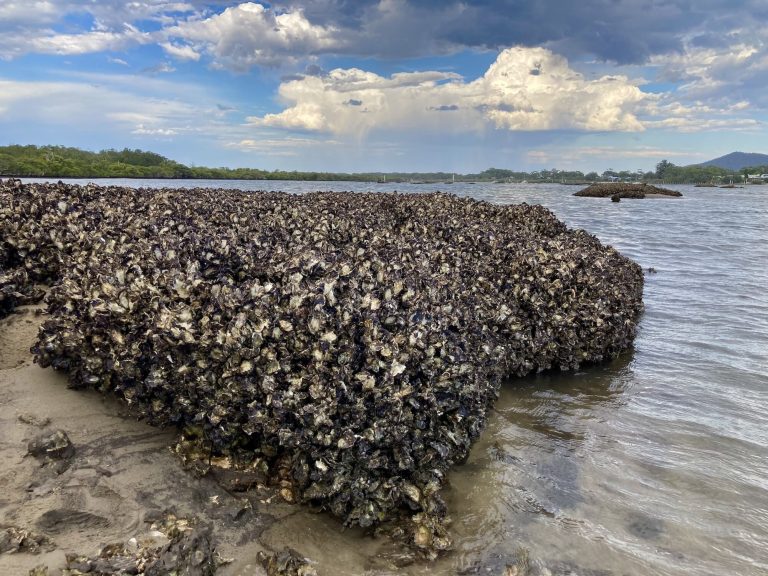
In addition to their direct harvest value, oysters build intricate vertical reefs that provide essential habitat for a number of commercial and recreational fishery species. Species ranging from blue crab to flounder to sheepshead and more, have been observed on oyster reefs at some stage of their life cycle.
Another benefit of oysters are their filtering capacity. An individual oyster can filter plankton, fertilizer runoff, and other pollutants from as much as 50 gallons of water per day, providing an enormous benefit to coastal waters. Before suffering massive declines, the oysters in the Chesapeake could likely filter the entire volume of the Bay once a week.
In the last two centuries, as much as 85% of all oyster reefs globally have been lost, making oyster reefs among the most threatened habitats in the world. A combination of overfishing, habitat destruction, introduced diseases, and water quality degradation have conspired to significantly impact this vital resource. While the current status of oyster reefs is dire, many agencies are making efforts to address water quality and recreate habitat by recycling used oyster shells to create new substrate for wild juvenile oysters to attach to. Commercial oyster growers are also helping boost populations by seeding privately leased oyster beds with hatchery-grown juvenile oysters (called “spat.”)
Data Activity
The Virginia Marine Resource Commission (VMRC) has kept records on harvest from both public oyster reefs that have been replenished with shell and privately-leased oyster reefs that have been replenished with both shell and juvenile oysters. Using the Harvest Data sheet below, graph landing trends for both public and private harvest then answer the questions below.
Discussion
- What do the data show about the landings of Virginia oysters over time? Is the overall trend going up, going down, or staying somewhat stable? Is there a significant difference in landings between public and private reefs? Why might that be?
- Some years show sudden and dramatic declines in landings only to rebound the following season. What factors may have contributed to those short-term disruptions in production? Hint: Look at major weather events that align with those years.
- Juvenile oysters need clean shell surfaces to settle on to help build reefs. If you were an outreach scientist, how would you develop a public awareness campaign to encourage the consumers to recycle oyster shells for the benefit of reef rebuilding?