
DATA Series
Where's the Beach?
- Lesson Time : 60 minutes
- Grade Level : 8-12
- Vocabulary: longshore transport, erosion, accretion, dune profile




Summary
Using beach profile data from Ocean City, Maryland, investigate coastal erosion and sediment transport.
Objectives
- Recognize causes and effects of coastal erosion.
- Assess changes in beach profiles by graphing profile data or conducting beach profiles in your area.
- Appraise and criticize coastal erosion management options.
Introduction
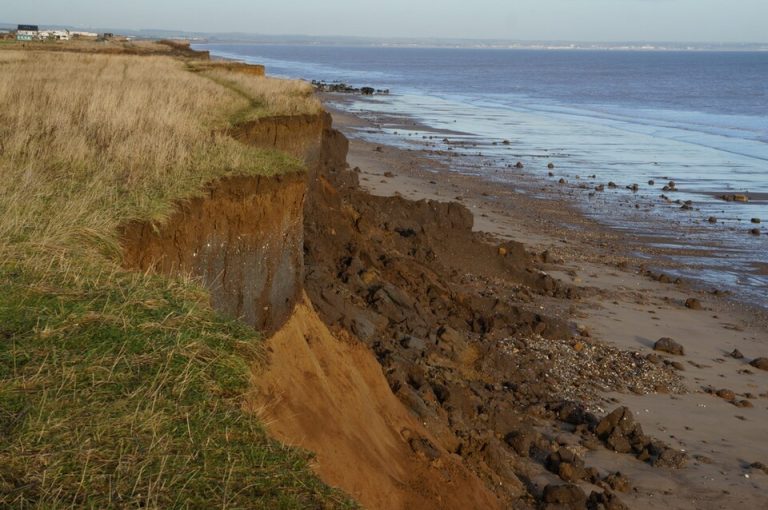
When you build a sandcastle on the beach, you don’t expect it to last forever. You spread out your towel to sunbathe, but you know you can’t stay in the same spot all day without getting wet. Venturing into the ocean to swim, you are cautious – wondering what the currents are doing that day. Subconsciously, you are attuned to the fact that the coastal environment is constantly changing. Coastal erosion is a natural process even in pristine environments. However, in areas where human activity negatively impacts the shoreline, coastal erosion can become a serious problem.
Beach sand originates mainly from rivers and streams which carry it directly to the ocean. Sand also comes from the gradual weathering of exposed rock formations and cliffs along the shore, and from the deterioration of shell, coral, and other skeletal fragments. Wave action, wind, and currents move sand up and down the coast. This movement is called longshore transport. Sand is also moved onshore and offshore by waves, tides, and currents. During storms, high-energy waves often erode sand from the beach and deposit it offshore as submerged sandbars. This sand is then moved back onshore by low-energy waves in periods of calm weather. Sand that is moved offshore by winter storms, leaving steep narrow beaches, is returned to the shore by the gentle waves of summer, creating wide, gently sloping beaches.
Erosion and accretion of sediment on coasts are natural processes influenced by the beach slope, sediment size and shape, wave energy, tides, storm surge, and nearshore circulation, among other things. Human activities such as dredging, river modification, removal of backshore vegetation, and installation of protective structures such as breakwaters can profoundly alter shorelines, mainly by affecting the sediment supply.
Changes to our shorelines affect our transportation routes, our communities, and our ecosystems; therefore, it is important to monitor them. Researchers can determine shoreline locations with information gathered from topographic maps, aerial photos, Global Positioning System (GPS) surveys, and beach profiles. By analyzing trends over time, future changes can be predicted. Planners and developers can use the predictions for planning future use of the shoreline.
Data Activity
If you live near a beach, you can create your own beach profiles and look at changes over time. If you’re not near a beach, take a look at data that were collected Madeira Beach, Florida between 2016 and 2024. Select a year and plot profiles for each month on the same graph to see how the beach changed over the course of a year. How did the slope change? In what month was the beach most gently sloping? Is this what you would have expected?
Coastal erosion is a serious problem on many coasts. Perhaps you remember the houses on the cliffs in Pacifica, California which were lost to erosion during the 1997-98 El Nino winter storms. Twelve houses were condemned as unsafe and seven were knocked down before they were claimed by the sea (A U.S. Geological Survey study was conducted in this area before and after the storms which showed that the 1997-98 El Niño accounted for about 50 years of cliff erosion at this location). On the west-central Florida coast, as in many highly developed coastal regions, millions of dollars are spent on beach nourishment projects every 4 years. In fact, it is estimated that coastal erosion in the U.S. costs $700 million annually. In 1999, $10 million was spent moving the historic Cape Hatteras Lighthouse in North Carolina to save it from the sea. This project was widely publicized and hotly debated. Would you have been in favor of moving the lighthouse or against it?
Coming soon!
Coming soon!