
DATA Series
$$$eaweed: Harvesting Marine Plants
- Lesson Time : 90 minutes
- Grade Level : 9-12
- Vocabulary: algae, phycocolloids, agar, alginate, carrageenan


Summary
Using data from the FAO Global Fishery and Aquaculture Production Statistics, students will explore harvest and production data of seaweed around the world.
Objectives
- Compare the world harvest of different types of seaweed.
- Evaluate and graph seaweed production harvests.
- Interpret variation in global seaweed production.
Introduction
Seaweed has been traditionally harvested in Europe, Asia and the Pacific Islands for thousands of years, and today harvesting seaweed is big international business. Not only are seaweeds harvested for direct consumption of the plant itself, but also for the intriguing and functional chemicals or “natural products” they produce. Many of these compounds have applications for human use. Chemicals derived from seaweed are used in medicines, food and beauty products, and industry. That’s right, the ice cream and chocolate milk in your fridge, the lipstick in your makeup bag, and even the toothpaste you brushed your teeth with this morning may all be made with seaweed extracts.
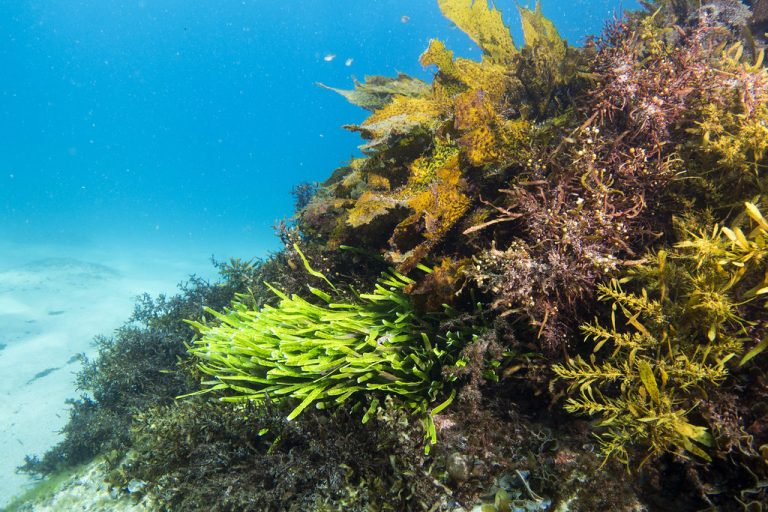
How does seaweed end up in both whipped topping and paint? Most seaweeds are algae — aquatic plants that lack roots, stems or leaves. Algae are divided into three main types: red, brown and green. From each of these types of algae, scientists have been able to identify and isolate compounds that can make foods creamier and paint thicker. Red and brown algae produce phycocolloids (“phyco” = seaweed, “colloid” = glue) that include agar, alginate and carrageenan. Green algae produce the antioxidant beta carotene which is a precursor to vitamin A.
The use of these compounds in food products took off in the second half of the 20th century as the demand for prepared foods increased. Compounds like carrageenan improve the quality of the food and help to stabilize it, making the item more appealing to consumers. Currently the import and export of seaweed is a $200 billion business, with the United States importing nearly $50 billion worth each year. And as more nations become developed, the need for more prepared foods and pharmaceuticals will increase the demand for seaweed compounds.
To meet this demand, selected marine algae are grown, harvested and processed on large scales around the globe. Global seaweed production tripled from 11.9 to 36.3 million tons between 2002 and 2022 and in 2025, farmed seaweed accounted for 97% of the total seaweed harvested worldwide (UNCTAD). Progress does have a price tag, however. Some of the most productive seaweed species have been transplanted outside their natural range. In their new environment, they are “introduced” or “alien” species. Despite the best intentions and efforts of researchers & industry, these species sometimes escape into the wild (through the aquarium trade, aquaculture, ship ballast waters and boat hulls) and have serious ecological impacts. Hawai’i reports problems with invasive algae species and is trying different methods to prune back algae growth affecting coral reefs.
Although seaweed farming is an ancient practice, innovative methods are always being explored. Bridgeport Regional Vocational Aquaculture School in Connecticut has been working with Connecticut Sea Grant researcher Dr. Charles Yarish to improve aquaculture techniques for the red alga, nori. Students and scientists are cultivating nori next to salmon aquaculture pens. The red algae remove from the water excess nutrients produced by the fish, and in turn use those nutrients to grow.
Who harvests and imports seaweeds? The activity below will help you answer this question.
Data Activity
We’ll start by using the United Nations Food & Agriculture Organization (FAO) statistical site to research fishery production of marine algae around the world.
How Much Seaweed Is Produced?
What were reported world seaweed production for the past decade? Using the FAO Stats we can investigate the world production and dollar value of aquacultured seaweeds.
Go to the FAO Global Aquaculture Production online query page:
https://www.fao.org/fishery/statistics-query/en?dataset=aquaculture
Make sure you are using the Aquaculture dataset.
Select the Species tab.
Click the plus sign next to Aquatic plants.
Click the plus sign next to Seaweeds if needed.
Check the box next to Brown seaweeds.
Click Submit.
View the results for Aquaculture: Quantity. Record the production quantity data, in metric tons, for the past decade.
Next, switch to the Aquaculture: Value results page. Record the production value data, in U.S. dollars, for the same years.
Repeat the process for Green seaweeds and Red seaweeds.
To view combined seaweed data, check the boxes for Brown seaweeds, Green seaweeds, and Red seaweeds at the same time before clicking Submit.
Create graphs showing the results. You may graph quantity and value separately for each seaweed group, or you may combine brown, green, and red seaweed data into comparison graphs.
Be sure your graphs include:
- A clear title
- Labeled axes
- Units of measurement
- A legend, if more than one seaweed group appears on the same graph
After graphing your data, compare the trends. Which seaweed group had the highest production quantity? Which had the highest production value? Did quantity and value follow the same pattern, or were they different?
Looking at the Data
Use the FAO Global Aquaculture Production dataset to answer the following questions. Remember that Quantity and Value are now shown on separate results pages.
Production Quantity
- What was the production quantity of brown seaweed for the most recent year available?
- What was the production quantity of green seaweed for the most recent year available?
- What was the production quantity of red seaweed for the most recent year available?
- What was the total production quantity of all seaweeds for the most recent year available?
- How has total seaweed production changed over the last decade?
Describe the overall trend. Did production increase, decrease, or stay about the same? - Which seaweed group had the greatest production quantity in the most recent year? How does it compare to the other groups?
Production Value
- What was the dollar value of brown seaweed production for the most recent year available?
- What was the dollar value of green seaweed production for the most recent year available?
- What was the dollar value of red seaweed production for the most recent year available?
- What was the total value of all seaweeds for the most recent year available?
- How has the total value of seaweed production changed over the last decade?
Describe the overall trend. Did value increase, decrease, or stay about the same? - Did production quantity and production value follow the same pattern over time? Explain using evidence from your data.
- Which seaweed group had the highest production value in the most recent year? Was it the same group that had the highest production quantity?
Thinking About Global Trade
Seaweed is not only grown for local use. It is also traded around the world for food, fertilizers, animal feed, cosmetics, pharmaceuticals, and industrial products.
- Based on your data, which seaweed groups do you think are most important in the global seaweed market? Explain your reasoning.
- Why might countries import seaweed or seaweed products instead of producing all of their own?
- What types of products or industries might depend on imported seaweed?
- How could changes in seaweed production affect global trade?
- What are some environmental or economic benefits of seaweed aquaculture?
- What are some possible challenges or concerns related to expanding seaweed aquaculture?
Making Sense of the Data
- What was the most surprising thing you noticed in the seaweed production data?
- What is one question you still have about global seaweed production, value, or trade?
- If you were advising a coastal community interested in seaweed farming, what information from this dataset would be most useful?
- Based on the trends you observed, do you think global seaweed aquaculture will continue to grow? Use evidence from the data to support your answer.
Sell Your Seaweed
Visit Ocean Planet’s “There Are Algae in Your House!” page, and use their list of household foods containing seaweed products. Imagine that you would like to get into the seaweed business and culture seaweed. Pick a type of seaweed that you might grow (red, green, or brown) and determine which food companies might be interested in buying the corresponding byproduct (carrageenans, beta carotene, or alginates) from you. Design a marketing campaign to sell your seaweed byproduct.
Seaweed products provide just one example of how chemicals derived from marine organisms have become increasingly important in our lives. The sea’s biodiversity and extreme environments continue to attract scientists as they search for new compounds, organisms and biotechnology opportunities. The treasures we can extract from the sea should also heighten our efforts to sustain healthy marine ecosystems.